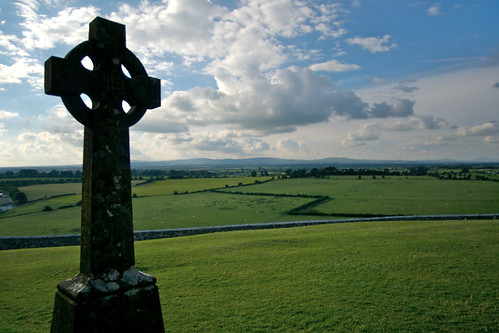
Showing posts with label Faith in History. Show all posts

Tuesday, 21 August 2012

Pride Cometh Before An Iceberg

Exactly 100 years ago a great tragedy occurred at sea that has both haunted and fascinated us ever since. Today I've got a very special guest-post by Elizabeth Rose from Living on Literary Lane. She is on a month-long blog tour promoting her new novel, Violets Are Blue. I haven't read her novel, yet, but I can assure you that I can't wait to do so! The novel is set in the context of the tragedy of the Titanic, so I asked Elizabeth to share with us what she learned from her research into this historical event which holds many lessons for us today as it did then.  

So, dear readers, I give you, Elizabeth Rose!


via Google Images
It is known as the greatest marine disaster in the world. Mention the name Titanic to anyone, and they will immediately think of the "unsinkable" ocean liner and her tragic end on April 14th, 1912. The film of the same name is one of the highest grossing movies in the world (though whether that has to do with the historical background [flawed though it may be] or the romance is a subject worth debating). Everyone knows about the Titanic.

Having reached the centennial of her infamous sinking just this April, the Titanic seems to be present in everyone's minds now more than ever. Why is that? What lures us to the heartbreaking story? Perhaps it is the courageous way in which men of all classes stood aside to let their beloved wives and children go first in the lifeboats, knowing full well that it meant perishing in the icy waves. Perhaps it is purely the drama and excitement of the night. Or perhaps it is the fact that this grand ocean liner whose makers claimed was unsinkable actually struck an iceberg and went down, causing the deaths of nearly fifteen hundred people.

It has always amazed me that the Mayflower — a tiny vessel only used for carrying wine across the Atlantic — managed to convey one hundred and twenty Pilgrims to the New World in the year 1620. They withstood tumutuous waves and horrid sickness, but by the power of the Living God, they arrived on the shores of Cape Cod relatively unharmed. Surely if the Mayflower can make it across the ocean in 1620, a fabulously outfitted ocean liner such as the Titanic can carry her twenty-two hundred passengers safely nearly three hundred years later. After all, if it was good in the "old days", it's sure to be better in modern times, right?

Well, whether that's true or not, it was the mindset that governed the makers of the Titanic and nearly everyone living in the early 1900s. Bigger is better. Size means everything. And if you aren't willing to match the grandeur of your new ship with your confidence, you may as well go home, because you'll never survive in this era. (A bit of an exaggeration, but you get the point.) Yet, when we study history, we see that such an opinion does not last forever, and all those who are not humble eventually will meet their end.


This isn't sounding good for the Titanic, is it?


Before we continue discussing this particular ocean liner, let us move backwards a few centuries. Good, good. You're looking at two ships docked in the harbor, but the vessels are much smaller than the one on which you previously laid your eyes. Yes, you are watching the aforementioned Mayflower, as well as her sister ship, the Speedwell, though the latter will not be making the journey across the ocean. You glance cautiously at those around you — a seemingly solemn group, but still cheerful. Some of the younger children are chasing each other around the cargo waiting to be loaded, but their mother silences them with a few quick words, pulling her little ones back to her side. You look up at the ship that is to carry you and your one-hundred and nineteen companions, and wonder if you'll ever make it.


You were right to worry — the journey alone was tumultuous. Seasickness, monotony, and the crowded place 'tween decks where all of the passengers are required to spend their hours. The worst part was probably during that terrible storm, when the main beam broke and needed to be secured with the large screw some of your companions had brought from England. Of course, Mistress Hopkins' expected child would choose that very moment to arrive, and John Howland would keep falling overboard and being blown back on again.


But somehow, despite all those troubles, you and your family and friends managed to travel across the cold ocean safely. Though you are landing at the barren Cape Cod, with little in the way of shelter and winter fast approaching, you kneel when your feet have finally touched the shore. You lift your face to Heaven, praising the Lord and thanking Him for His mercy on your small ship. By the hand of  Providence, you have made it to the New World.


We will be leaving the 1600s for a while now and moving forward to 1912. Once again, you're standing on a dock and watching a ship (this is all becoming rather familiar and predictable, is it not? Just wait until 11:49 P.M. on the 14th, and you'll get enough adventure to last you your life). You watch as men, women, and children are loaded on to the ship. A young Irish mother, walking slowly because of the child she bears, clutches her toddler's hand as they cross the gangplank. You watch her turn back for a moment, a single tear caught in her blue eye like a gem, but then she enters and you can no longer see her in the bustle of people around you. Trying to catch a glimpse of the object of her attention, you see her husband standing a few yards behind you, his expression identical to hers.


A man's loud voice to your right shakes you and makes you turn curiously towards the noise. His wife is so covered in satin, fur, and pearls that you can barely tell where they leave off and she begins. Her hat, so enormous it could have its own staircase, threatens to be knocked off by the wind, were it not for the gloved hand she kept on it. The husband is the one you heard speaking, and he is dashing man in the clothes of the upper class. He is shaking his head at his wife as they stroll towards the gangplank.


"Nonsense, my dear, you speak utter nonsense." His voice is loud enough to carry through all of Southampton, but the speaker doesn't seem to notice.


"I only said that there was a slight chance—" she begins, but he cuts her voice off.


"A slight chance of what? Exactly." He knods his head confidently. "Nothing. Why, of all the ships in the world, you say this one will sink? The idea alone is positively preposterous. Come, Claire, I believed you were above such superstition."


"I am not being superstitious," his wife argues, a bit of fire in her tone.


"Good. Then we are agreed." He takes her arm once more, and they continue towards the gangplank.


I hardly need to continue this story, as we all know how it is going to end. At 11:49 P.M., the Titanic's hull was scraped by a large iceberg, and at exactly 2:29 A.M., she sank beneath the waves, leaving what little was left of her passenger stranded in lifeboats and clinging to other flotation devices. It would be several hours before the Carpathia would arrive to rescue them, and for many, that was several hours too late.


You may be wondering why I gave this little history lesson. (I assure you that boring my readers with dull facts they already know was not one of my motives.) In truth, it was not entirely to relay an old story of a famous marine tragedy, but to issue a warning. In Proverbs 16, verses 17 through 18, it says, "Pride goes before destruction, a haughty spirit before a fall." Though you have most likely heard the story of the Titanic too many times to count, you may still be in the dark as to the destructive effects of pride. Too much pride and self-confidence has been the downfall of many an ancient leader who thought himself indomitable, and now it has even caused the end of a ship thought so "unsinkable" she didn't need half her lifeboats. You see how ridiculous it is to argue against the sovereignty of God?


(Also, if you ever set foot on a ship and they say that lifeboats for all of the passengers is a waste of deck space, I suggest you find another way to get home.)


. . .

Elizabeth    Rose

Elizabeth Rose is a follower of the Most High who seeks to live every day of her life in accordance with 1 Corinthians 10:31. She loves all sorts of books (the thicker the better), is convinced that Irish Breakfast tea is the closest thing this world will get to heaven, dances until her feet ache, stays up until all hours writing, wears pearls at every opportunity, and obsesses over Les Misérables and The Scarlet Pimpernel. Her debut novel, Violets Are Blue, was published in May 2012. You can find her on Literary Lane, most likely with The Count of Monte Cristo in hand, and ink on her fingers. 

Saturday, 16 June 2012

God Makes Kings...and Queens, too!

With Queen Elizabeth II's Diamond Jubilee celebrations still fresh in our memories, I'd like to share something that you probably won't find in the normal history books about the so-called 'chance of history' that brought Elizabeth to the throne. Until she was 10 years old or so, young Elizabeth was not directly in-line to the throne of England.
Queen Elizabeth II
Many of you would've probably watched the movie The King's Speech. It tells the story of how it all came about very well (its a very good movie by the way, except for some course language used and some swearing in some scenes - which could be muted while watching). Another good rendering of the story (covering it from beginning to end) is found in the movie Bertie and Elizabeth.  


Here, though, is a brief overview of the story:
King George VI and Queen Elizabeth
(Queen Elizabeth's Parents)
In the early 1930s, just before the outbreak of World War II, England passed through a very significant crisis. In many ways, it was at a crossroads. The choices made would have indirect, but very significant consequences for England, the Empire, and perhaps the rest of the free world. 

After King George V (Queen Elisabeth II's grandfather) died, his eldest son, David, became King Edward VIII. His reign would be very brief, however,  because of his own ungodly choices. He insisted on marrying the twice-divorced-American woman, Mrs. Wallace Simpson.  
Edward VIII
According to the laws of the Church of England, this was not possible since the reigning monarch is considered the head of the Church of England and the Defender of the faith. (Ironically, all this started from the English Reformation of King Henry VIII!). 


Well, King Edward VIII was given a choice by Parliament and the government. Either to forget about Wallace Simpson and stay king or insist on marrying her and abdicate! 


No monarch ever abdicated before in the entire history of the British monarchy. Edward VIII made his choice and abdicated. The first ever to do so.


With this done, his younger brother, Albert, suddenly found himself on the throne of England and his daughter, Elizabeth, next in-line. This was a total shock to everyone and most especially, to Albert, who became King George VI (Queen Elizabeth II's father).
King George VI
Hollywood and the media was taken by storm with this story. Many thought it as absolutely fairy-tale-like romance...a king giving up his kingdom for the woman he loved... 


But as time went on and darkness fell over Europe and the world, people's perspectives changed dramatically. 


For it was not long after George VI's coronation, that Hitler began his blitzkrieg of Europe. Britain declared war on Germany and was now in great danger. Britain needed a leader, a source of inspiration for the nation. 


Well, here comes one of things that have fascinated me very much. You may even see a little glimpse of what I see as some of God's sense of humour in it too. 


In the leadership of the Axis powers, especially as seen in Hitler, amazing eloquence and charisma was wielded by its tyrants. From the surviving archival footage, one cannot but be amazed at the hypnotic-charisma of Hitler as he rallied Germans with his speeches in those large Nazi rallies. 


We would think that God would raise a leader in Britain with similarly eloquent qualities to counteract this dark evil descending over Europe. 


Not so. God choose two leaders for Britain who had speech impairments, Winston Churchill and King George VI!! 


Their speeches were not as charismatic as Hitler's but through them they rallied Britain (and later the rest of the free world) to the cause of freedom and good. See the King's Speech.


On Victory In Europe Day (VE Day)
Left to Right: Princess Elizabeth, Queen Elizabeth, Prime Minister Winston Churchill, King George VI, and Princess
Margaret 


King George VI's deep sense of duty and commitment to his people and the land of Great Britain was a major source of encouragement for everyone. He and his family became deeply involved with the sufferings of the people of Britain during the Blitz. They helped raised the moral of the people. 


Most came to believe that if Edward VIII, with his selfish ways and lack of any sense of duty to his people, would have made Britain really vulnerable. Not only that, he and Mrs. Simpson were sympathetic to the Nazis. If Britain had fallen to Hitler....well, history would have turned out quite differently...oh, but there are no 'ifs' in God's world, as one Godly Christian once said. Everything is ordained by His eternal wisdom and knowledge. 


Here, at last, I come to the part you will NOT find in the history books. 


You see, this did not just happen. God moved his people to pray during the crises of Edward VIII's abdication and He answered their prayers. 


One of those intercessors was the man of God, Rees Howells, from Wales who started the Bible College in Swansea. 


Here is what went on behind the scenes and newspaper reports, as told by Norman Grubb (someone who was there at the college at the time - the same one who wrote the biography of C.T. Studd by the way):


In 1936, there came the serious national crisis over King Edward VIII and his proposed marriage. In this again the Lord led the College to take a stand in prayer. The diaries of the daily meetings give the following account: 
December 4. "The News about the King has come to light in the morning papers, and the Director [Rees Howells, the founder] tells us how serious conditions are. We came back in the evening and pleaded with the Lord to guide the king, and give wisdom and discernment to all those concerned in this crisis."
December 5. "Day of prayer in College. Situation in England very grave, because it concerns not only our land, but the British Empire."
December 6. "Day of prayer and fasting in the College. We pray for the Empire in its present crisis. The Lord reveals that it is His will for Edward to abdicate. Mr. Howells was as strong as a lion in the fight, and declared, 'Edward is not to reign, or the Lord has not spoken by me.' There is a wonderful victory as we believe in the evening."
December 7. "There is thanksgiving over the victory of yesterday. The papers reveal that while at the end of last week the king was challenging the position, now he is anxious to do only what will be best for the Empire." 
December 9. "Believing for the Lord to help King Edward to make decision according to God's will, and that his soul may be blessed." 
December 10. "Came bake at 2.20 p.m. to ask the Lord to control the country, now that the news of the abdication of King Edward VIII is known."
December 11. "We are thankful for this believing of the Holy Spirit. The Lord has saved the Empire, and raised the standard of life in our beloved land."

Norman Grubb, Rees Howells Intercessor: The Welsh Coal Miner a Prince with God, Pennsylvania, USA: Christian Literature Crusade, 1980, pp. 215-216 

Isn't our God amazing! What I saw in this story is God's amazing Providence. People sometimes wonder where was God in all this darkness of World War II? Well, this is one glimpse. He prepares the way and involves His people in it, too. 
Queen Elizabeth II
Yes, God makes Kings...and Queens, too...as well as Presidents, Prime Ministers, and all other rulers. Now some are Satan's choice, but that never catches God off-guard. He uses even these for His glorious purposes and for the good of His people. We must believe this. 


This story also encourages us and shows us the responsibility we have to pray in order to have Godly rulers. He guides our prayers and He answers them. 


One last thought before closing this very lengthy post. This story keenly reminds me of these verses: 


'He hath shewed strength with his arm; he scattered the proud in the imagination of their hearts. He hath put down the mighty from their seats, and exalted them of low degree.' (Luke 1:51-52)


'Behold, the nations are as a drop of a bucket, and are counted as the small dust of the balance: behold, he taketh up the isles as a very little thing...All nations before him are as nothing; and they are counted to him less than nothing, and vanity...It is he...that bringeth the princes to nothing; he maketh the judges of the earth as vanity...' (Isaiah 40: 15, 17, 22, 23)


________________________
Resources: 
Mark Logue and Peter Conradi, The King's Speech: How One Man Saved The British Monarchy, New York: Sterling, 2012

Norman Grubb, Rees Howells Intercessor: The Welsh Coal Miner a Prince with God, Pennsylvania, USA: Christian Literature Crusade, 1980, pp. 215-216 


Sunday, 27 May 2012

Mercy Above the Sceptred Way

Image via Mercy and Truth Blog


'Surely his salvation is nigh them that fear him; that glory may dwell in our Land. Mercy and truth are met together; righteousness and peace have kissed each other. Truth shall spring out of the earth; and righteousness shall look down from heaven.' (Psalm 85:9-11) 


Mercy and truth or mercy and justice are often very difficult to reconcile. They can often seem so contradictory. However, this what God has done in saving us. We deserve justice for our sins, but in God's Son, Jesus Christ, who died for our sins, mercy triumphs. Praise the Lord for His great love and mercy! 


Oliver Cromwell
Psalm 85 was one of Oliver Cromwell's favourite psalms. He repeated it often in many of his speeches, especially the ones he gave at the end of his life. He often referred to it as he championed religious freedom (one of his favourite causes - even when he was attacked for it) and he clearly saw it as a vision for the spiritual welfare of his nation. He was very concerned that many Christians were often over zealous with the truth, being  self-righteous and concerned with justice bu with very little mercy for one another. That grieved him very much throughout his life. One cannot fail to see this when reading his personal letters and his public speeches.  In one of those speeches to one of his parliaments as Lord Protector, he encouraged the new MPs to apply this psalm to their lives and in their governing of the nation. He said:  
"Mercy and Truth shall meet together" [Psalm 85]. Here is a great deal of "truth" among professors, but very little "mercy"! They are ready to cut the throats of one another. But when we are brought into the right way, we shall be merciful as well as orthodox: and we know who it is that saith, "if a man could speak with the tongues of men and angles, and yet want that, he is but sounding brass and a tingling cymbal!" [I Corinthians 13:1] 
Thomas Carlyle, Oliver Cromwell’s Letters and Speeches: With Elucidations, (London: Chapman and Hall, 1894), Vol, IV of V, pp. 210-222. 
(Read full speech here)

We still need this today as Christians with one another, in the home and in Church, and with those around us. We must not hold onto justice and truth without mercy. I think this quote from Shakespeare's Merchant of Venice puts it very beautifully: 


 Shakespeare, Merchant of Venice, Act IV, Scene I


Yes, Lord, gives us hearts of truth and mercy always. Help us remember that it is Your mercy that saves us. 


God bless,

Sunday, 15 April 2012

This Day in History: Titanic (100th Anniversary)

Let us take a moment to reflect upon this horrific historical event that still haunts and fascinates us to this day because of the sheer scale of the tragedy. There are always lessons for us to learn. 

The Titanic! So majestic on the waters! 'Unsinkable' they called her.


'Unsinkable' they still call her


'Unsinkable' they said??

No! I'm grieved to say that, like any ship on this earth, it is 'Sinkable!' - If only they had realised this sooner!

One particular verse has been going through my mind that I think sums it all up. It is 1 Corinthians 10 verse 12: 


'Wherefore let him that thinketh he standeth take heed lest he fall.'

O Lord, give us the grace to always remember our frailty and put our trust in You alone

Amen.

Friday, 6 April 2012

An Unexpected, Life-changing Encounter

Good Friday is a very special day. A day when we remember the heavy price our Saviour, Jesus Christ the Son of God, paid for our salvation and redemption. His precious blood is what cleanses us from our sins and gives us eternal life. Without the events of that day all humanity would be in hopeless misery and darkness now and for all eternity. Neither you nor I would be able to know God, love Him, and approach Him. Thank you, Lord for the cross and the great price you paid for my salvation.

Now, on that Friday long ago, an suspecting man was thrust into the greatest event in history. It was then that He encountered Someone who changed his life forever.
The Gospels tell briefly of that encounter, but in it one could read a lifetime story. 


'And they compel one Simon of Cyrenian, who passed by, coming out of the country, the father of Alexander and Rufus, to bear his cross.' (Mark 15:21)
'And as they led him away, they laid hold upon one Simon, a Cyrenian, coming out of the country, and on him they laid the cross, that he might bear it after Jesus.' (Luke 23:26)


In his book, The First Easter, Peter Marshall imagines the scene of the procession to Calvary and that special encounter between Christ and Simon of Cyrene.   

It was an ugly situation as the procession went slowly along this way that will for ever be known as the Via Dolorosa [way of suffering or sorrow]. Meanwhile - Simon of Cyrene was approaching the city gate. 
He had just arrived in Judea, and was about to enter the Holy City, as a pilgrim for the festival. 
He had spent the night in some village just outside, and, rising early in the morning, had bathed and dressed himself carefully...with a tingling excitement because soon he would be in Jerusalem. The wonder of Jerusalem, that exiles had described, he would now see with his own eyes...the sounds of the Holy City...he would hear with his own ears. Yet He tried to keep calm, and as he set out on the short walk that lay between him and the city, he was very thoughtful. 

He walked along the winding path that sometimes ran through the fields...Sometimes along narrow roads between hedges where there was the fragrance of pomegranate trees and honeysuckle... Sometimes along the torturous course of the dried-up river bed where the earth was cracked with the heat of the sun.
       Sometimes it wound up the jagged hillside to twist down among the giant boulders and huge rocks behind which many a robber might hide. He walked along beside the tall rushes, where he frightened conveys of birds that flew wheeling, diving... 
And he walked through the divided crops, ripening in the sunshine. 
He could hear the sheep bleating on the inhospitable hillside, while the morning sun climbed higher and chased away the mists that lay in the hollows, trailing down into the ravines like tulle scarves.  
As he walked along, he was thinking of the temple and its glories, the history of his people and the worship of his fathers... 
Already he could see ahead of him the domes of the temple gleaming gold in the sunshine, could hear the pigeons that had their nest in the cupolas and gables, and he thought of his own city looking from her height over the blue waters of the Mediterranean. 
Then as he neared the city gate he began to hear shouting that grew louder and louder. 
There seemed to Simon to be a sort of chant running through the noise... 
        a refrain that men's voices made clearer and clear er until he thought he could recognise the word 
        "Crucify 
crucify 
      crucify...."  
They met right at the city gate ... Simon of Cyrene and the crowd. He found that the procession was headed by some Roman soldiers; he would recognise them anywhere... 
          the insignia on their shields... 
       and their uniforms... 
He could tell a legionnaire when he saw one.  
He had little time to gather impressions, and as for asking questions, that was impossible. He could not make himself heard in all the rabble. 
The noise and confusion with its sinister and malice made Simon shudder.  
Simon was aware of two moving walls of Roman steel. There was something strange about it all but, before he could understand it, Simon was caught up in it - sucked into the procession, and swept out through the gate again. 
Simon was excited, afraid...He was puzzled and ill at ease. He scanned face after face quickly, looking for some light of pity... 
          of friendliness, 
                 of welcome... 
But he found none. 
He felt the drama of the situation, the cruelty of it...And its horror crept over him like a clammy mist - and he shivered.  
He was captured by the procession, stumbling along, tightly wedged in the very heart of the crowd. 
Then he noticed that there were three men who staggered under the weight of crosses of rough, heavy wood on which these unfortunates were going to die.  
Each man was bent beneath the burden he carried, and perspiration moistened his drawn face. 
One of them was strangely appealing, His face was arresting. Simon felt his gaze returning again and again to that one face. He noticed that blood was trickling down from wounds in the brow. 
On His face there was a twig of long-thorned brier, twisted around in the shape of a crown and pushed down cruelly on His head.  
Simon watched with beating heart as they shuffled along, fascinated by the look in those eyes. 
He could see nothing else. Everything was forgotten, even why he had come to Jerusalem. This public execution had driven everything else from his mind. 
Forgotten for the moment were the temple and its services, 
         messages he brought from friends far away... 
               things he had been asked to get... 
Everything was forgotten as he watched this Man carrying the cross.  
And then He looked up! His eyes almost blinded by the blood that trickled down from under that grotesque crown that was on his head... 
Why didn't somebody wipe His eyes? 
And as Simon looked at Him, He looked at Simon...And the eyes of the two ... met! 
How did Christ know what was in Simon's heart?What was it that made Him smile, a slow, sad smile that seemed to still Simon's wildly beating heart and give him courage? 


The look that passed between them Simon never forgot as long as he lived, for no man can look at Jesus of Nazareth and remain the same. (my emphasis)
As these two looked at each other, the Man with the cross stumbled, and the soldiers, moved more by impatience than pity, seeing that the Nazarene was almost too exhausted to carry the cross any further, laid hands on Simon and conscripted him to carry it.
He was the nearest man. 
He was strong.
His shoulders were broad!
Simon's heart almost stopped beating; he tried to speak, but no words came.
A few minutes before, he had been a lonely pilgrim quietly approaching the Holy City. And now, there he was in the midst of a procession of howling men and women, walking between two moving walls of Roman steel, and carrying on his shoulder a cross on which someone was going to die!


The look of gratitude and love that flashed from the eyes of Jesus as Simon lifted the load from those tired, bleeding shoulders did something to the man from Cyrene, and in an instant life was changed. (my emphasis)

Simon never could explain it afterwards - how it happened! 

There are moments of spiritual insight that defy the limits of syntax and grammar. 
There are some things too deep for words.
But all at once he saw the meaning of pain...
          understood the significance of suffering...
The meaning of prayer was unveiled...
          and the message of the Scriptures.
He saw prophecy take form and live before him. 
He remembered words of the psalmist and the prophets of old, words that until now had been without sense of meaning, but now... he saw ... and understood. (my emphasis)

Yes, the one who meets Jesus of Nazareth will never be the same again. No-one can remain neutral. If you haven't yet had such a personal encounter with Jesus Christ, ask Him now. He is near and always ready to heal and forgive. If you have had that wonderful encounter already, take a moment to thank Him for His sacrifice and ask Him to refresh that relationship. This is what I pray. Amen.


God Bless, 
 
_________________
Reference
Peter Marshall, The First Easter, (ed.) Catherine Marshall, London: Hodder and Staughton, 1959, pp. 54-59 

Saturday, 17 March 2012

Hall of Faith Series: Men of Faith - St. Patrick


*****************************************
Since it is St. Patrick's Day today, I decided 'St. Patrick' would be my character for this week's 'Hall of Faith Series'. If you ask many people nowadays who St. Patrick was, they would most likely not know very much other than the myths and legends that have been weaved and weaved around him for countless generations. These legends have obscured the man behind those legends and made most of us (yes, even us Christians) forget why he became such a legend in the first place.

Patrick (c. A.D. 386-461) wrote very little about himself and no one during his lifetime wrote about him either. However, we are fortunately left with a few of his writings that tells us something of the true Patrick, a holy and humble man of great faith in God with a truly apostolic mission. The most important document is the Confessio or Confession (*I highly recommend reading it*). In it he sketches his life story - how he was captured by Irish slave traders, how he called on the Lord in the day of his distress and was saved, how he miraculously escaped his captivity and returned to his home in Briton, then how he was called back to the people who had enslaved him in order to preach the Gospel to them, and how he obeyed God's call despite the danger and difficulties

Paul Gallico said this about Patrick in his A Steadfast Man: A Life of St. Patrick,

He [Patrick] stands forth as a wonderfully human being, a man with almost all man's failings, yet touched by the divine. The testimony of his own hand exposes one who is not ashamed to admit that he owed everything to God, and that, had it not been for Him, he, Patrick, would have been other than he was.
Out of the pages of the Confessio arises the figure of a man of indomitable purpose and compelling spiritual power, who, as [Bishop] Secundinus [probably a nephew of Patrick] wrote in his hymn, 'in sincerity of heart had confidence in God'.
It is this sincerity, faith, and confidence - the utter subjection of himself to God - that gave Patrick his stature and account for the success that has placed him amongst the saints of the ages. 
 Patrick's trust in God breathes from every page and from every line he wrote. It replaced a confidence that he never felt in himself, for Patrick entertained no illusions as to his initial abilities and talents. But God made everything possible to him, helped him to overcome every obstacle, physical or spiritual, with which his adventurous life was studded. he walked armoured in this faith and nothing could touch him; not the swords and spears of his enemies, or the occasional envy or spite of his friends. 
It was this love for God and his dedication to the life, the work and the word of Christ that gave Patrick his steadfast and unchanging nature. God was Patrick's catalyst who fused and tempered his character. From the time that the boy Patrick discovered Him on the freezing slopes of Mount Slemish, there was not a thought or action that was not first funneled through God. Thus the Saint's line of action ran as straight as an arrow, undeviating, unwavering. It was impossible for him to act other than in concert with his God, who had called him to serve. He had the word of that God and that Christ, spoken through the Scriptures and the Gospels; he lived by them to the utmost of his ability and he asked of those about him and those whom he preached and converted to try to do likewise. And you will see, glittering from some of his paragraphs. like jewels, his joy when he succeeded. (p. 124-125) 


Patrick's faith in God and his obedience to His call to preach to the heathen Irish when nobody else thought it possible, changed the destiny and faith of a whole nation and influenced the development of Christian Europe after the fall of the Roman Empire. The monasteries that dotted the Irish landscape became a bastion of learning during the troubled times of the barbarian invasions in Europe. The beautiful calligraphic manuscripts created and preserved in those monasteries awe us all, the Book of Kells, being a chief example. 
There is so much more to learn about Patrick, his faith and his work for the Lord, maybe I'll leave that for another post for now. Until then, however, I highly recommend watching the docu-drama Patrick (narrated by Liam Neeson), which tells Patrick's story really well and it's very encouraging. 


I'd like to end with this: 

A Poem by St.Patrick
Written by St. Patrick in 377 A.D.

Lorica
I arise today
Through a mighty strength, the invocation of the Trinity,
Through a belief in the Threeness,
Through confession of the Oneness
Of the Creator of creation.
I arise today
Through the strength of Christ's birth and His baptism,
Through the strength of His crucifixion and His burial,
Through the strength of His resurrection and His ascension,
Through the strength of His descent for the judgment of doom.
I arise today
Through the strength of the love of cherubim,
In obedience of angels,
In service of archangels,
In the hope of resurrection to meet with reward,
In the prayers of patriarchs,
In preachings of the apostles,
In faiths of confessors,
In innocence of virgins,
In deeds of righteous men.
I arise today
Through the strength of heaven;
Light of the sun,
Splendor of fire,
Speed of lightning,
Swiftness of the wind,
Depth of the sea,
Stability of the earth,
Firmness of the rock.
I arise today
Through God's strength to pilot me;
God's might to uphold me,
God's wisdom to guide me,
God's eye to look before me,
God's ear to hear me,
God's word to speak for me,
God's hand to guard me,
God's way to lie before me,
God's shield to protect me,
God's hosts to save me
From snares of the devil,
From temptations of vices,
From every one who desires me ill,
Afar and anear,
Alone or in a multitude.
I summon today all these powers between me and evil,
Against every cruel merciless power that opposes my body and soul,
Against incantations of false prophets,
Against black laws of pagandom,
Against false laws of heretics,
Against craft of idolatry,
Against spells of women and smiths and wizards,
Against every knowledge that corrupts man's body and soul.
Christ shield me today
Against poison, against burning,
Against drowning, against wounding,
So that reward may come to me in abundance.
Christ with me, Christ before me, Christ behind me,
Christ in me, Christ beneath me, Christ above me,
Christ on my right, Christ on my left,
Christ when I lie down, Christ when I sit down,
Christ in the heart of every man who thinks of me,
Christ in the mouth of every man who speaks of me,
Christ in the eye that sees me,
Christ in the ear that hears me.
I arise today
Through a mighty strength, the invocation of the Trinity,
Through a belief in the Threeness,
Through a confession of the Oneness
Of the Creator of creation.     

God Bless, 

Sarah
_____________________________
References and Further Reading: 
- St. Patrick, Confession (available  online at http://www.ccel.org/ccel/patrick/confession.ii.html )
Patrick Docu-Drama
- Paul Gallico, The Steadfast Man: A Life of St. Patrick, London: Michael Joseph, 1958.
- Mary Wilson, Builders and Destroyers, God's Hand in History A.D. 300-700, Book IV, London: Blandford Press, 1968, pp. 60-8

Saturday, 3 March 2012

Hall of Faith Series: Abraham and Sarah (Hebrews 11:8-12, 17-19)


Well, it's time I did another 'Hall of Faith Series' post. It's been a while, hasn't it?  But, here I go now!

Today's Hall of Faith characters are Abraham and Sarah. They are indeed one of my favourites. However, I cannot adequately convey by a long shot the faith of these great characters, considering that the Bible places them as the father and mother of the faithful. Probably, that's why I've delayed so long in writing this post. 

They were not without failings and weaknesses, of course. The Bible records several of these. However, in spite of this, God's grace was made truly manifest in them, with everlastingly glorious consequences in their lives and history. 

Sunday, 5 February 2012

Hall of Faith: Noah (Hebrews 11:7)


************************************************
Today's Hall of Faith character is Noah. Yes, Noah and the Ark! Everyone knows about that! You know, the ark, the animals, the Flood, the rainbow, etc... Since childhood we've all just loved it. But guess what! I think I love this account more now than I probably ever did when I was a little child. That's because I know now how deep and serious it was, as well as amazing.

After Cain killed Abel, God gave Adam and Eve another son. They called him Seth. He grew up to be like Abel - a man who feared God. Now there were two main family lines on earth: the line of Cain (representing those who were of the world, who were ungodly) and the line of Seth (representing those who were children of God). The entire Bible is full of that tension between the sons of light and the sons of darkness. This also continues till today. 

The years pass and those of the line of Cain grew more and more wicked. For several generations there was a difference between the Cain Line and the Seth Line. As time went on, however, the Seth line began to intermingle with Cain's line. They took on their ways and soon became like them. They lost touch with God, their Creator. They forgot God's instructions. They became violent and wicked (see Genesis 6). The only person on earth who kept himself and was not defiled by all of this was Noah. The Bible says that God saw Noah was just, 'perfect in his generation', who walked with Him (Genesis 6:9). What a wonderful thing for God to look and see us perfect in His sight. He sees that when we are clothed with the Righteousness of Christ. Amen! 


When God saw the wickedness, He regretted that He created man (see Genesis 6:6)! However, He wanted to save Noah. So He told him He was going to destroy the whole earth with a Flood. God told Him to build himself a huge ark and take with him his wife, his three sons, and their wives, as well as, two of every kind of animal, male and female, and seven from the clean animals. 

In Hebrews 11:7 it says that 'By faith Noah, being warned of God of things not seen as yet, moved with fear, prepared an ark to the saving of his house; by the which he condemned the world, and became heir of the righteousness which is by faith.' 


Noah believed God and obeyed Him when it was not the popular thing to do. Can you imagine! He was the only really Godly man on earth! It reminds me of the words of the song: 'Though none go with me, I still will follow'. 
Noah really had faith in God. He built the ark contrary to all human reasoning. Building a ship on dry land! Yet, he feared God and trusted His Word and that's what saved him, his family, and all mankind. He did not look to the seen and visible, rather he looked to the unseen, which is eternal (see II Corinthians 4:18).


Give us Lord that faith. To trust you and obey you without wavering and always look to that which is unseen which will last forever. Amen!

Learn More:
I highly recommend watching this classic movie about Noah. It follows the Biblical account closely. Though, I think the actual ark was much bigger, and perhaps a little bit more orderly:) 


Thursday, 12 January 2012

Hall of Faith Series: Abel and Enoch (Hebrews 11:4-5)


Welcome to the first post in the Hall of Faith Series. 
I hope you'll be blessed.
*******************************************************************************

Abel offering a
'more excellent sacrifice than Cain'
The list of characters in the Hall of Faith of Hebrews 11, starts from the early beginnings of history with righteous Abel, who was the first one on earth to ever experience death and death by violence. 

"By faith Abel offered unto God a more excellent sacrifice than Cain, which he obtained witness that he was righteous, God testifying of his gifts; and by it he being dead yet speaketh" (Hebrews 11:4) 


As we all know the account from Genesis, he was the second son of Adam and Eve. Unlike his brother Cain, Abel took heed to what his parents said God required of them after their fall in the Garden of Eden. This was now the only way to approach God as sinners - offering a blood sacrifice. It was, of course, looking forward to Christ, the Saviour, who was to come and be '...the Lamb of God, which taketh away the sin of the world' (John 1:29). God gave Abel true saving faith. 


Abel was a shepherd, but Cain was a farmer (see Genesis 4:2). The Bible say in Genesis 4 that one day Cain and Abel decided to offer a sacrifice to God. Cain decided to offer fruits and vegetables he has grown. This does not sound too bad at first. However, he totally missed the whole meaning of the offering. He had no faith in it. It is was just a duty to him.


Abel on the other hand understood by faith what the offering represented. The blood of the blameless lamb was to be his substitute before God for his sins. Through faith he saw his Redeemer. That was what he brought to God - '...the firstlings of his flock and of the fat thereof' (Genesis 4:4). It was also his best. The Bible says that 'the Lord had respect unto Abel and to his offering: But unto Cain and to his offering he had not respect' (Genesis 4:4-5). God looked into Abel's heart and found faith and saw him as righteous. But He did not find it in Cain. 


Cain, of course, was angry with God and Abel and so, murdered his own brother! In 1 John 3:12, it says why he slew him: 'because his own works were evil, and his brother's righteous.' Even in his death he still speaks faith to us. 


May the Lord give us the faith of righteous Abel! 

*****************************************************


The next character in the Hall of Faith is that of Enoch. We know so very little about him, except for these precious words: 

"By faith Enoch was translated that he should not see death; and was not found, because God had translated him:  for before his translation he had this testimony, that he pleased God" (Hebrews 11: 5). 


Enoch and Elijah, were the only ones on earth to ever experience this: not tasting earthly death.


God did this for Enoch because he pleased Him. That is indeed a precious thing to have that said about you. But without FAITH it is impossible to please God (see Hebrews 11:6). When we approach God we must believe '...that he is, and that he is a rewarder of them that diligently seek him' (11:16). Therefore, Enoch was full of faith in God. 


The only other place in the Bible where we know something more about Enoch's faith is in Jude 1:14-16, where Enoch is said to have prophesied, saying that '...the Lord cometh with ten thousands of his saints, to execute judgement upon all, and to convince all that ungodly among them of their ungodly deeds which they have ungodly committed, and of all their hard speeches which ungodly sinners have spoken against him...' 


This is just a glimpse of the godliness and faith of this man of God. 
May the Lord grant us the faith of Enoch that causes us to please God always. 


Thank you for joining me on this journey. My presentation here is very poor. But I know it will be a learning journey for me and am being blessed with it as I hope it will bless you, too. 


**********************
Learn More
Genesis 4:1-16
Hebrews 11: 4-6

Related Posts Plugin for WordPress, Blogger...